
(This article was first published in the Critical Path, the monthly newsletter of PMI Sydney Chapter publish in August 2023)
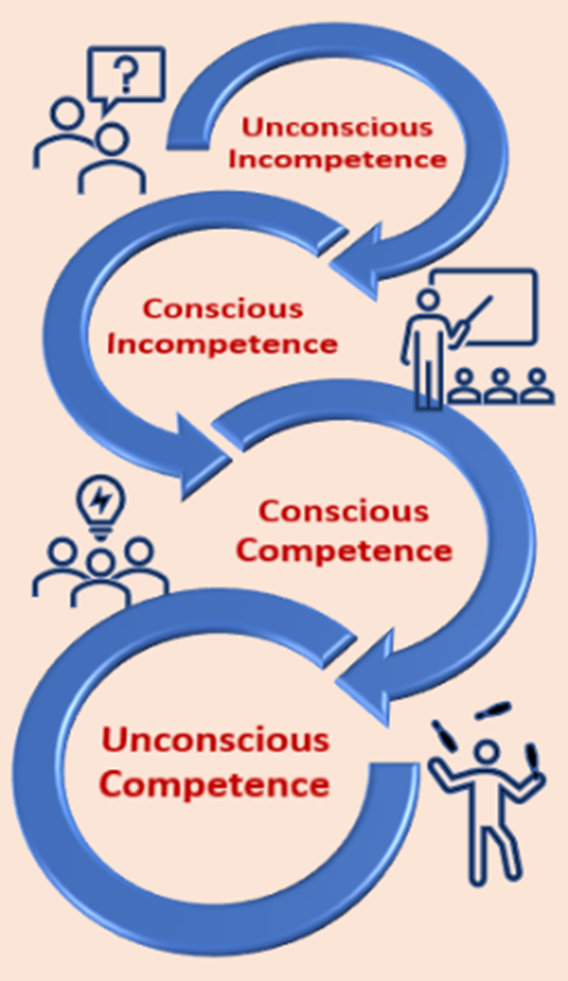
In the dynamic world of project management, the ability to master new skills is a critical factor for success. The journey of learning progresses through four stages: Unconscious Incompetence, Conscious Incompetence, Conscious Competence, and Unconscious Competence. For project managers, like all business leaders, understanding and harnessing this journey can significantly enhance their ability to excel in their roles.
1. Unconscious Incompetence:
At the outset, individuals are unaware of their lack of skill in a particular area—this is the stage of Unconscious Incompetence. In this stage, recognising the gaps in one’s capability is crucial. Aspiring leaders should engage in self-reflection and seek feedback to identify areas that need improvement. By acknowledging the existence of these gaps, aspiring leaders lay the foundation for growth.
2. Conscious Incompetence:
As you become aware of your shortcomings, you enter the stage of Conscious Incompetence. Here, you become acutely aware of your lack of proficiency in certain aspects of your job. Emotions like frustration and self-doubt might arise, but it’s important to view this stage as an opportunity for growth. It’s essential to approach this stage with humility and a growth mindset. Acknowledging one’s limitations enables them to seek out relevant training, mentorship, and resources to bridge the gaps in their skills. The ability to admit vulnerability and actively pursue learning sets the stage for transformation.
3. Conscious Competence:
Through consistent effort and learning, you progress to the stage of Conscious Competence. Here, you acquire the necessary skills but require deliberate focus and practice to apply them effectively. This stage demands continuous refinement and practice. As you work on honing your skills, you see improvements in your ability to navigate challenges, communicate effectively, and make informed decisions. However, this stage requires focused attention and continuous practice to maintain your competence. Constructive feedback and self-evaluation become valuable tools for improvement at this stage.
4. Unconscious Competence:
The pinnacle of skill mastery is reached in the stage of Unconscious Competence. At this stage, your skills have become so ingrained that they are almost second nature. You effortlessly execute tasks, make decisions, and lead your team with confidence. You can allocate your mental resources to more complex or strategic matters. While this is the goal, it’s important to remain vigilant against complacency. Continuous learning and adaptation are necessary to maintain this high level of competence.
Applying the stages of learning to project management
Understanding these learning stages is essential for project managers and team leaders to lead effectively. Recognising areas of unconscious incompetence allows you to identify skill gaps within yourself and your team. Embrace conscious incompetence by encouraging a culture of continuous learning and skill development. Provide resources, training, and mentorship to support your team’s growth.
Guide your team members through conscious competence by setting clear expectations and providing constructive feedback. Celebrate their progress and accomplishments, fostering a positive learning environment. Strive for unconscious competence not only in your own skills but also in the skills of your team. This will create a high-performing team capable of navigating challenges with finesse.
Mastering the learning stages is an ongoing journey that empowers project managers and team leaders to excel in their roles. By recognising and embracing the stages of unconscious incompetence, conscious incompetence, conscious competence, and unconscious competence, you can elevate your leadership capabilities and foster a culture of growth within your team. Remember, a commitment to continuous learning and improvement is the key to long-term success in the dynamic world of project management and team leadership.
 Ibrahim Dani