
Tag Archives: Project Management

The Four Stages of Learning

(This article was first published in the Critical Path, the monthly newsletter of PMI Sydney Chapter publish in August 2023)

In the dynamic world of project management, the ability to master new skills is a critical factor for success. The journey of learning progresses through four stages: Unconscious Incompetence, Conscious Incompetence, Conscious Competence, and Unconscious Competence. For project managers, like all business leaders, understanding and harnessing this journey can significantly enhance their ability to excel in their roles.

1. Unconscious Incompetence:

At the outset, individuals are unaware of their lack of skill in a particular area—this is the stage of Unconscious Incompetence. In this stage, recognising the gaps in one’s capability is crucial. Aspiring leaders should engage in self-reflection and seek feedback to identify areas that need improvement. By acknowledging the existence of these gaps, aspiring leaders lay the foundation for growth.
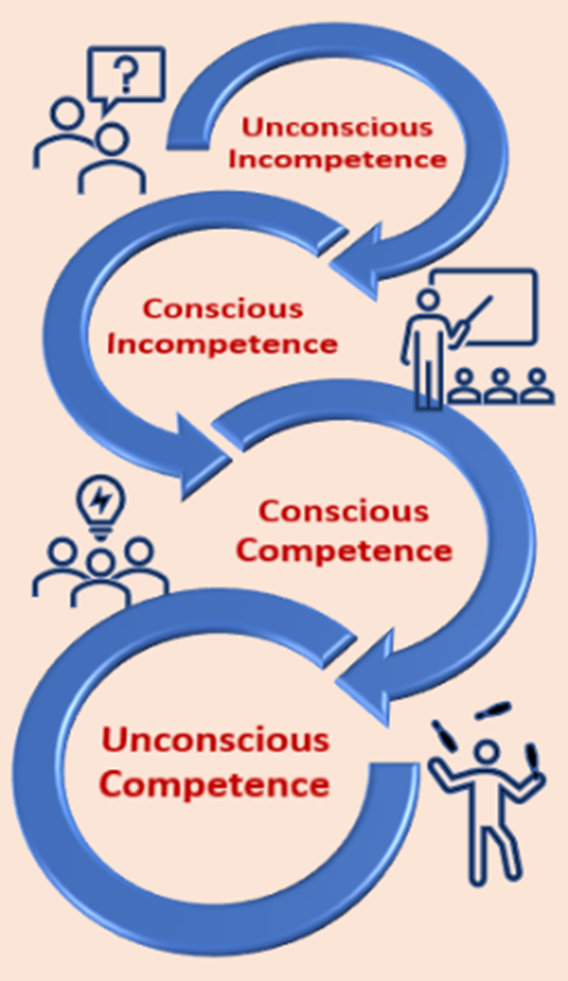
2. Conscious Incompetence:

As you become aware of your shortcomings, you enter the stage of Conscious Incompetence. Here, you become acutely aware of your lack of proficiency in certain aspects of your job. Emotions like frustration and self-doubt might arise, but it’s important to view this stage as an opportunity for growth. It’s essential to approach this stage with humility and a growth mindset. Acknowledging one’s limitations enables them to seek out relevant training, mentorship, and resources to bridge the gaps in their skills. The ability to admit vulnerability and actively pursue learning sets the stage for transformation.

3. Conscious Competence:

Through consistent effort and learning, you progress to the stage of Conscious Competence. Here, you acquire the necessary skills but require deliberate focus and practice to apply them effectively. This stage demands continuous refinement and practice. As you work on honing your skills, you see improvements in your ability to navigate challenges, communicate effectively, and make informed decisions. However, this stage requires focused attention and continuous practice to maintain your competence. Constructive feedback and self-evaluation become valuable tools for improvement at this stage.

4. Unconscious Competence:

The pinnacle of skill mastery is reached in the stage of Unconscious Competence. At this stage, your skills have become so ingrained that they are almost second nature. You effortlessly execute tasks, make decisions, and lead your team with confidence. You can allocate your mental resources to more complex or strategic matters. While this is the goal, it’s important to remain vigilant against complacency. Continuous learning and adaptation are necessary to maintain this high level of competence.

Applying the stages of learning to project management

Understanding these learning stages is essential for project managers and team leaders to lead effectively. Recognising areas of unconscious incompetence allows you to identify skill gaps within yourself and your team. Embrace conscious incompetence by encouraging a culture of continuous learning and skill development. Provide resources, training, and mentorship to support your team’s growth.

Guide your team members through conscious competence by setting clear expectations and providing constructive feedback. Celebrate their progress and accomplishments, fostering a positive learning environment. Strive for unconscious competence not only in your own skills but also in the skills of your team. This will create a high-performing team capable of navigating challenges with finesse.

Mastering the learning stages is an ongoing journey that empowers project managers and team leaders to excel in their roles. By recognising and embracing the stages of unconscious incompetence, conscious incompetence, conscious competence, and unconscious competence, you can elevate your leadership capabilities and foster a culture of growth within your team. Remember, a commitment to continuous learning and improvement is the key to long-term success in the dynamic world of project management and team leadership.

Emotional Agility for Project Managers – A Path to Success

(This article first appeared in the Critical Path, the monthly newsletter of PMI Sydney Chapter in October 2023)

We are increasingly bombarded by a huge number of bits of sensory information every day. The human mind works tirelessly to make sense of the humongous amount of information it is getting every second, and to respond with the right decision. This is exacerbated in the high-stakes world of project management, where deadlines loom, teams need to be guided effectively, and stakeholders demand results. Dr. Susan David, a renowned psychologist and author, has championed the importance of emotional agility in personal and professional life. In this article, I explore the concept of ‘Emotional Agility’ developed by Dr. Susan David and how it enables project managers to navigate the complex landscape of project leadership with greater ease and success.

The Project Manager’s Balancing Act

Project managers shoulder a myriad of responsibilities. They must lead their teams, allocate resources, maintain clear communication with everyone, and ensure the project stays on course. These demands often lead to high levels of stress, clouting their judgement and forcing them to react quickly.

Emotional agility begins with self-awareness—a cornerstone of Dr. Susan David’s philosophy. Project managers must recognise and understand their own emotional responses to effectively lead and manage their teams. By becoming aware of emotional triggers and understanding when they are feeling overwhelmed, anxious, or frustrated, project managers can proactively address these emotions to make better decisions.

Unhooking from Destructive Patterns

Dr. Susan David’s concept of being “hooked” by emotions is a crucial component of emotional agility. Being hooked refers to becoming entangled in unproductive, often destructive, emotional patterns. For project managers, this might involve getting stuck in negative thought loops, dwelling on mistakes, or becoming paralysed by fear.

Emotional agility helps project managers recognise when they are hooked and provides them with the tools to unhook from these patterns. By developing emotional agility, project managers can break free from counterproductive emotional cycles, enabling them to make better decisions and lead more effectively.

The Power of Emotional Awareness

Emotional awareness empowers project managers to make thoughtful and informed decisions. For instance, if a project manager acknowledges that unforeseen delays are causing mounting frustration, they can pause, reflect on their emotions, and choose a more constructive response. This may involve revising timelines, transparently communicating challenges with the team, or seeking additional resources.

Moreover, self-awareness helps project managers avoid impulsive, emotion-driven reactions that can lead to conflicts or suboptimal decisions. By understanding their emotional states, they can detach from the immediate emotional response and make rational choices, maintaining composure in challenging situations.

Leading with Authenticity

Another important aspect of emotional agility is authenticity. Authentic leadership involves being true to oneself and one’s values while also being attuned to the needs and emotions of others. Project managers who lead authentically inspire trust and confidence in their teams.

Authenticity in leadership requires project managers to embrace vulnerability, admitting when they don’t have all the answers or when they’ve made a mistake. This fosters a culture of openness and trust within the team. When project managers demonstrate emotional authenticity, it encourages team members to do the same, leading to stronger connections and better collaboration.

Adapting to Changing Circumstances

Project managers often encounter unexpected challenges or shifts in project dynamics. Emotional agility enables them to adapt to these changes effectively. This adaptability is especially important in today’s rapidly evolving business landscape.

Instead of clinging to a rigid plan, an emotionally agile project manager can pivot and adjust the project’s course as needed. This flexibility not only prevents roadblocks but also allows for innovation and creative problem-solving. It’s about being open to new ideas and approaches, even if they weren’t part of the initial project plan.

Emotional Agility in Communication

Project managers who are emotionally agile can attune to the emotions of their team members, comprehending their concerns and motivations. This enables them to tailor their communication to be more supportive and encouraging. Emotional agility also aids in conflict resolution, as project managers can navigate challenging conversations with empathy and composure.

Furthermore, when project managers are emotionally agile, they can anticipate and address potential communication breakdowns before they escalate. This proactive approach saves time, prevents misunderstandings, and fosters a more harmonious working environment.

Resilience in the Face of Setbacks

No project unfolds without setbacks and obstacles. An emotionally agile project manager possesses the resilience to weather these storms and emerge stronger. Resilience entails learning from setbacks rather than succumbing to them.

When a project manager encounters a setback, emotional agility allows them to process their emotions and thoughts in a healthy manner. They can analyse what went wrong, glean lessons from the experience, and adjust their strategies for future projects. This resilience not only benefits the project manager but also sets an example for the team, encouraging them to adopt a growth mindset and view setbacks as opportunities for learning and improvement.

Emotional agility – a path to success

In the field of project management, emotional agility is not a luxury; it’s a necessity. Project managers who develop emotional agility can lead with authenticity, make more informed decisions, adapt to changing circumstances, communicate effectively, and exhibit resilience in the face of setbacks. These skills not only enhance a project manager’s performance but also contribute to a healthier and more productive work environment.

Emotional agility is not a static trait but a skill that can be cultivated and honed over time. Project managers can start by practicing self-awareness, embracing authenticity, and being open to personal growth and development. As they become more emotionally agile, they will find themselves better equipped to handle the challenges and complexities of modern project management, ultimately leading to more successful outcomes and happier, more engaged teams.